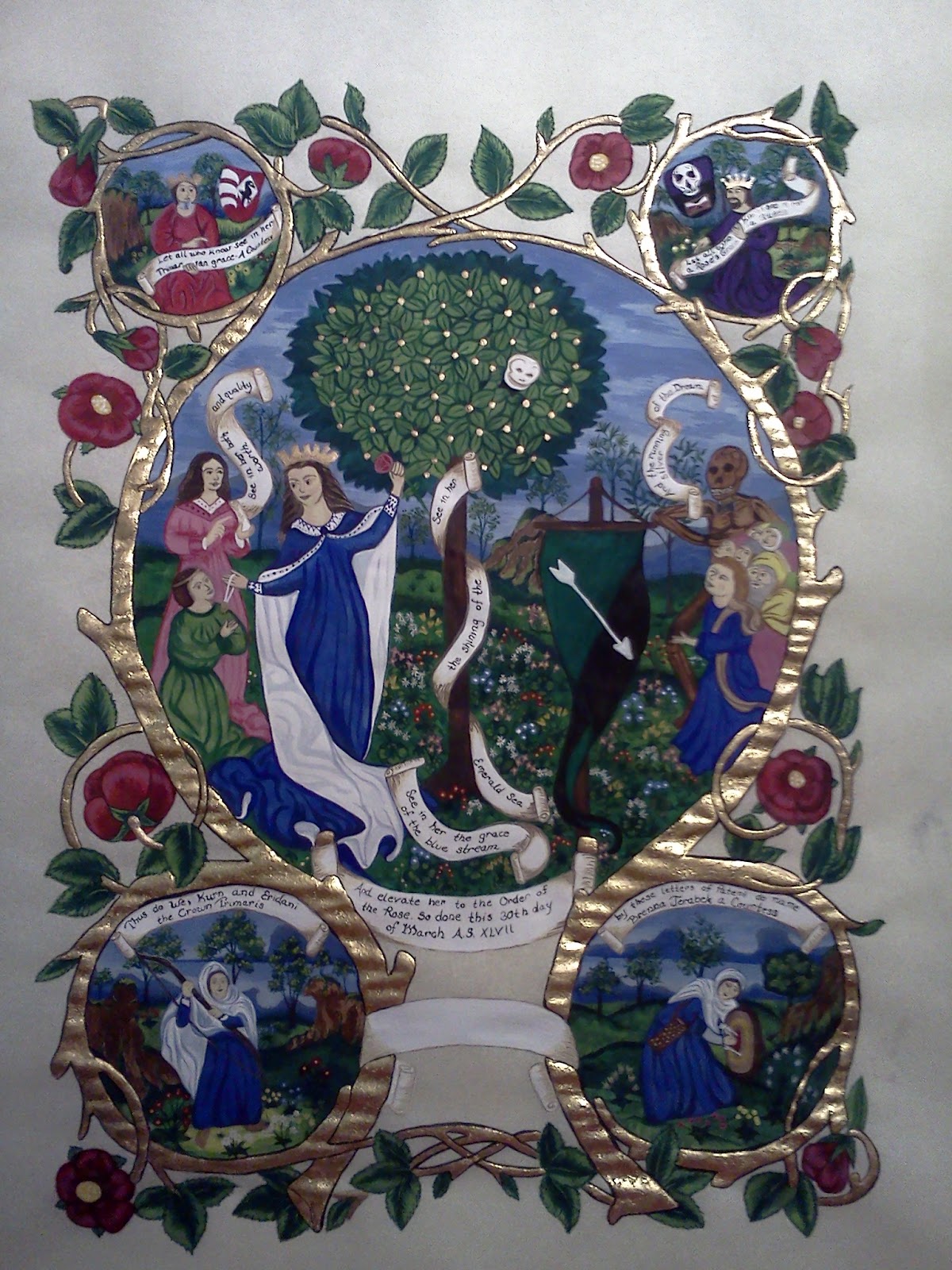
I love newcomers. To them all of the grandeur, pomp and pageantry of the SCA is a wonder. I love watching how they wince when they watch a strong blow landed in a heavy combat tourney, how they lean forward listening to songs at a bardic circle, how they just see with wonder the things to which we have become accustomed.
How do we help them to keep that wonder and become members of our community rather than just visitors? What takes a spectator and makes them yearn to be a participant? We must include new people and train them to be better SCAdians. However, we have to be better SCAdians as we work to set that example.
It takes a little time. It means a little forethought. It requires you to think about more than just yourself and your friends. Sure, it's easy to get caught up in what you are doing but think of it this way- that new person might be the one helping you mop a hall in ten years.
Fact: People like to feel welcome.
It is hella uncomfortable to stand around in a room or campsite full of people who all know each other and are chatting amiably when you don't know a soul. Make a small effort to be welcoming and you might find a new friend or just help a new SCAdian get started a little easier. Invite new people to step deeper into an event, a class, a project and help them become welcome participants.
- We can welcome new people by smiling and saying good day each time we see someone who we do not recognize. Positive body language and polite conversation are a nice place to start.
- We can introduce ourselves to people we don't know. "Hi, I'm sorry, have we met? I'm so and so. Are you new to the area?"
- If you are sitting at a bardic or in a class and someone wanders up looking interested, take a moment and invite them to come closer and join the group. Let them know what is going on and let them know they can ask questions.
Fact: People like to feel needed and useful.
Standing around with empty hands when everyone else has something to do is uncomfortable. No event in the history of the SCA has ever gone off without a bunch of help being needed. Try to look out for new people and invite them to pitch in.
- Introduce yourself to people who look lost or alone when you are working on a project. Invite them to help you but let them know that they do not have to help. "Hi there, if you have a few minutes would you mind lending us a hand setting up these chairs?"
- If you are working on a project and notice someone watching ask them if they would like to learn more about it. "Hi, I'm processing reservations for the event. Would you like to learn more about how we do this?" "I'm chopping vegetables for dinner tonight. Want to keep us company while we work?"
- Say thank you every time someone helps you. If you have just met them or if you have known them for decades, it does not matter. They helped you. Offer your thanks often and loudly.
Fact: People like to feel attractive.
Just once, take a moment to watch how a person changes at a day event when they wear their mundane clothing into a changing space and come out wrapped in a different century. Those who dress up stand a little straighter and smile a little easier. When people feel like they look good, they feel instantly better about themselves. Don't donate your hideous old kitchen tunic to Gold Key. Don't put your newcomer in rags.
- Make an effort to help new people find loaner clothing that will fit them properly, be comfortable and will look nice. No, they don't need to be fully kitted in Elizabethan, but help them look respectable.
- Make an item and donate it to Gold Key. A simple tunic dress, a fresh and clean pair of pants and tunic, accessories like simple belts.
- Take a moment of your time and tell people when they look good. New or old to the SCA, a genuine compliment feels good.
- Don't send out a new person dressed in something you would be embarrassed to wear. Ever.
- If a new person admires your garb, help them find the knowledge on how to purchase it or how to get started with making it. Never tell someone that your garb would be too difficult or complex for them to make. It's rude and you have no idea what they are capable of. Be a good teacher, a good SCAdian and a good person.
Fact: People like to feel knowledgeable.
When new people ghost around the edges of classes, tourney fields or even groups of people, they are interested. Something drew them in and caught their attention. Take some time with new people and help them find out how to learn more
- Ask people what interests them and then suggest people on site or upcoming classes that might be able to help them gain knowledge.
- Suggest some good books or websites on the topic. Ask for their email address and share your knowledge with them in a way that is useful and not an on-the-spot info dump.
- No one gets it right the first time or every time. If someone makes a mistake, uses the wrong title of address or uses the wrong term for something accidentally, be polite and correct them with a smile. Use gentle language like you would want from someone who was correcting you.
Fact: People like to feel appreciated.
Doing a good job or working hard and then not being acknowledged is a soul-sucking experience.
- Say thank you. A lot. Whenever someone helps you, say thanks. Every time. It's not overkill.
- Be free with tokens of thanks. Pack a few blank note cards that can be turned into on-the-spot thank you notes. Have a few spare items of largess that you can hand to someone when they do something cool or helpful. Exhibiting this behavior of recognition helps to teach our new people how they can thank people in the future.
- Give honest and genuine compliments. Tell people when they look good or that you appreciate their effort with something they have done. Thank people for serving.
- Compliment even small acts of chivalry. A new person offering to help carry a chair should be made to feel welcome and then thanked for their effort. a gentleman pausing so that a lady can pass. Someone holding a door. These are the ideals we want in our society. Start by doing them. Finish with acknowledging them in others. In time, it really will catch on.
Fact: People like to try stuff out.
One of the recent inspirations that struck me was from one of my own associates: My apprentice HL Finnguala inghen Alister was making a piece of stick weaving and another friend looked on with interest. "Do you want to learn how to make this?" Finnguala asked. The other lady quickly said yes. Finnguala whipped a stick weaving starter kit out of a bag and put it in the lady's hands. "Let's get you started then." I was floored: what a great way to get someone started with an art? It made me realize that I need to up my game. A scribal art starter kit might be a little harder, but maybe I just need to think a lit farther out of the box.
What have I left out? How can I be a better SCAdian by helping others get involved in this club?